Special Education
-
Special Education Compliance
-
Bulletins
- Information Update Bulletin 26.01
- Information Update Bulletin 24.02
- Information Update Bulletin 24.01
- Information Update Bulletin 23.01
- Information Update Bulletin 22.02
- Information Update Bulletin 22.01
- Information Update Bulletin 21.02
- Information Update Bulletin 21.01
- Information Update Bulletin 20.02
- Information Update Bulletin 20.01
- Information Update Bulletin 19.01
- Information Update Bulletin 18.02
- Information Update Bulletin 18.01
- Information Update Bulletin 14.02
- Information Update Bulletin 14.01
- Information Update Bulletin 13.01
- Information Update Bulletin 12.02
- Information Update Bulletin 11.01
- Information Update Bulletin 10.08
- Information Update Bulletin 10.07
- Information Update Bulletin 10.06
- Information Update Bulletin 10.05
- Information Update Bulletin 10.04
- Information Update Bulletin 10.03
- Information Update Bulletin 10.02
- Information Update Bulletin 10.01
- Information Update Bulletin 07.01
- Information Update Bulletin 06.03
- Information Update Bulletin 06.02
- Information Update Bulletin 06.01
- Information Update Bulletin 03.02
- Information Update Bulletin 01.04
- Information Update Bulletin 01.01
- Information Update Bulletin 00.04
- Information Update Bulletin 00.03
- Information Update Bulletin 98.04
- Information Update Bulletin 99.02
- Dispute Resolution Options
- Equitable Services Requirement: Special Education for Parentally Placed Private School Students
- Medicaid School-Based Services (SBS)
- Procedural Compliance Self-Assessment (PCSA)
- Sample Special Education Forms and Notices
- Seclusion and Physical Restraint
- Section 504
- Special Education Laws
- Special Education and Residential Care Centers (RCCs)
- State Special Education Procedures
-
Bulletins
- Special Education Information for Families
-
Comprehensive Special Education Evaluation
- A Framework for Comprehensive Special Education Evaluation
- Comprehensive Special Education Evaluation: Why it Matters
- Addressing Bias in a Comprehensive Special Education Evaluation
- Comprehensive Special Education Evaluation within a Multi-Level System of Support (MLSS)
- Comprehensive Special Education Evaluation: Related Legal Citations
- Comprehensive Evaluation Supplemental Resources
- Council on Special Education
-
Disability Categories
- Autism
- Blind and Visually Impaired
- Deaf and Hard of Hearing
- Deafblind
- Emotional Behavioral Disability
- Intellectual Disability
- Orthopedic Impairment
- Other Health Impairment
- Significant Developmental Delay
- Specific Learning Disabilities
- Speech or Language Impairment
- Traumatic Brain Injury
- Multilingual Learners and Special Education
- Students with the Most Significant Cognitive Disabilities
- Twice Exceptional Students
- Early Childhood Special Education
- Federal Data Collection Statewide Reports
- IDEA Federal Funding
- Individualized Education Programs (IEPs)
- Open Enrollment Special Education
- Related Services
- Resources to Attract, Prepare, and Retain Special Educators and Related Services Providers
- Specially Designed Instruction
- Special Education Paraprofessionals
-
Special Education Learning Resources
- Co-Teaching in Wisconsin
- Director of Special Education and Pupil Services Weekly News
- Functional Behavioral Assessment (FBA)
- Implementation Zone
- Inclusive Strategies to Address Behavioral Needs for Students with IEPs
- National Organizations to Support Implementation of Evidence-Based Practices for Students with IEPs
- Professional Learning Events
- Regional Special Education Network (RSN)
- Resources for Health and Safety for Students with Disabilities
- Special Education and Pupil Services Leadership
- Supports for Educating Students with IEPs
- Workload Considerations
- Transition Planning for Students with IEPs
-
Wisconsin's State Performance Plan - Indicators
- State Performance Plan for 2020-2025
- Annual Performance Reports
- Collection of Cyclical Indicators
- Determination of Compliance with IDEA Requirements
-
WI State Performance Plan (SPP) Indicators
- Indicator #1: Graduation
- Indicator #2: Dropout
- Indicator #3: Assessment
- Indicator #4: Suspension and Expulsion
- Indicator #5: Educational Environments
- Indicator #6: Preschool Environments
- Indicator #7: Preschool Outcomes
- Indicator #8: Family Engagement
- Indicators #9 and #10: Disproportionate Representation
- Indicator #11: Child Find
- Indicator #12: Early Childhood Transition
- Indicator #13: Secondary Transition
- Indicator #14: Post School Outcomes
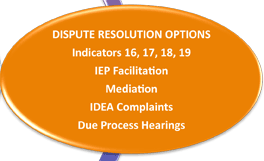
- Indicators #15 & #16: Dispute Resolution Options
- Indicator #17: State Systemic Improvement Plan (SSIP)
- Wisconsin Alternate Academic Achievement Standards
- Special Education A-Z Index
- Temas de educación especial
- Special Education Web Portal
- About Special Education at DPI
WI State Performance Plan (SPP), Indicators #15 & #16, Dispute Resolution Options
IDEA State Complaint
Percent of signed written complaints with reports issued that were resolved within 60-day timeline or a timeline extended for exceptional circumstances with respect to a particular complaint, or because the parent (or individual or organization) and the public agency agree to extend the time to engage in mediation or other alternative means of dispute resolution, if available in the State.
Any individual or organization may file a complaint with the Department of Public Instruction if they believe a public agency has violated state or federal special education requirements. The department must investigate a complaint and issue a written decision within 60 days. DPI verifies all identified noncompliance is corrected within one year.
Due Process Hearing
Percent of adjudicated due process hearing requests that were adjudicated within the 45-day timeline or a timeline that is properly extended by the hearing officer at the request of either party or in the case of an expedited hearing, within the required timelines.
Indicator 15
Indicator 15: Percent of hearing requests that went to resolution sessions that were resolved through resolution session settlement agreements.
Either the parent, the adult student with a disability, or the school district has the right to request a due process hearing. Within 15 days of receiving notice of the hearing request, the LEA must convene a meeting with the parents/adult student and relevant members of the IEP team to attempt a resolution. DPI monitors the timeline to ensure compliance with the 15-day timeline. When a due process hearing is requested, the department, by contract with the Division of Hearings and Appeals, appoints an impartial hearing officer to conduct the hearing.
Indicator 16
Indicator 16: Percent of mediations held that resulted in mediation agreements.
The department offers mediation to parents and local education agencies as a voluntary initial process for the resolution of special education disputes. The Wisconsin Special Education Mediation System (WSEMS) is funded through a DPI discretionary grant. WSEMS offers mediation and facilitated IEP meetings at no cost to either party.
The department reports data on these indicators in the Annual Performance Report (APR) to the Office of Special Education Programs (OSEP) on February 1. For current information regarding Indicator #15 and Indicator #16 please review the APR.
Training and Technical Assistance
For questions about IDEA State Complaints, Due Process Hearings, and Indicator 15, contact Patricia Williams 608-267-3720.
For questions about Indicator 16, contact Marge Resan 608-267-9158.